
Ace Organic Chemistry with EASE mini-course
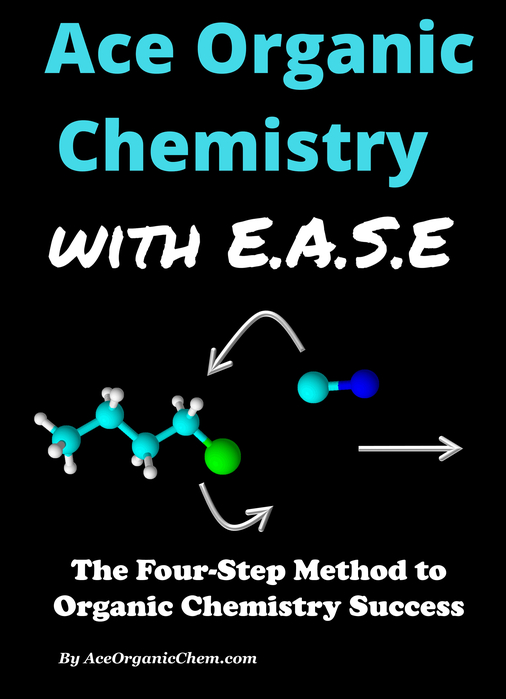
The E.A.S.E. method, presented here as a 2-hour mini-course, is a step-wise and logical approach to solving almost any organic chemistry problem and/or mechanism. Using the fundamental rules of organic chemistry, the method prompts students to think about the basic principles of organic chemistry each and every time it is used. By doing this, it becomes obvious that any organic chemistry student can solve a diverse range of organic chemistry problems, including ones that you have never seen before.
Reviews are huge for us
We are a small family business and reviews are a big deal.. Please take 2 minutes to give us a review on Amazon (we love 5 stars 🙂)
Ace Organic Chem Elite – Discounted for 86 Tricks Plus members
Ace Organic Chem Elite is the premiere organic chemistry learning system on the web. We know what you need to know, we provide you all of the resources, then tell you when to study which parts. Why struggle when you can learn organic chemistry the easy way?
And here are the lessons:
EASE Part 5: What not to do w/ EASE
Organic Chem with EASE?
The E.A.S.E. method is a step-wise and logical approach to solving almost any organic chemistry problem and/or mechanism.
Using the fundamental rules of organic chemistry, the method prompts students to think about the basic principles of organic chemistry each and every time it is used. By doing this, it becomes obvious that any organic chemistry student can solve a diverse range of organic chemistry problems, including ones that you have never seen before.
In this mini-course, we show you how to recognize how organic reagents act and react, discuss why organic reactions proceed as they do, and show you how to determine the mechanism and product of that reaction.